
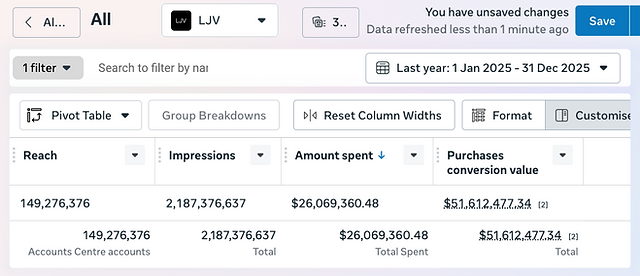
Creative Diversity: Explained ($25M in ad spend)
By Lachezar Voynov
Share this article
Creative Diversity was the most-used DTC marketing phrase in 2025.
When you ask someone what Creative Diversity means, you’d usually get something along the lines of “using a diverse set of ads inside your ad account” as if the phrase itself didn’t hint to the already.
Try it with your team.
Ask them to explain to you in 2-3 sentences what creative diversity means for them.
Then send the link to this document.
The purpose of this document is to break down what creative diversity means in a detailed but an easy to understand way.
First, we will start with some theoretical explanation, we will then move to the technical implementation that our ad creative agency follows to make sure we deliver diversified content to our clients, and then we will wrap up with 20 examples of diverse ad creative formats that you can start implementing today for your own brand.
Let’s start with the theoretical breakdown.
Creative Diversity - WTF is that?
The basic explanation: “To perform well in Meta's ad auction, each of your ads should combine several different creative elements, including a variety of formats, visuals, and text.” - Official Meta explanation.
In simple terms: Creative diversity means producing ads that are completely different from each other so that Meta can show them to a wider variety of users.
Why does that matter?
Meta’s ad retrieval system - Andromeda, analyzes millions of ads every time you open their app, segments each ad, and ranks which one you will see on your feed in real time.
This means that ads that look similar to each other will be put into the same segment.
Which means that if you have 10 UGC product-demonstration ads, they will all be put into the same segment.
Which means that you will compete against yourself, and most of your ads won’t deliver net new reach for your brand because they are fighting in the same segment.
Same segment = same target customer.
When you only create ads that are put into the same segment, you can not expand your reach.
The algorithm can’t target new customers.
Your frequency will increase.
Your ROAS will drop.
Your business will not grow.
So in order for you to understand HOW to diversify your ad creatives, you have to think of the different elements of an ad.
Here are the different ad creative elements:
-
Target Customer
-
Angle
-
Ad Creative Type
-
Static ad
-
Carousel
-
Video
-
Collection Ads
-
Dynamic Product Ads
-
-
Ad Creative Style
-
Low-production
-
This is the typical UGC content shot with an iPhone
-
-
High-production
-
Visuals created in a studio with high-end, high-quality equipment
-
-
-
Ad Creative Format
-
UGC
-
Talking Heads
-
Broll + Voiceover
-
POV
-
Product Demonstrations
-
Tutorials
-
etc.
-
-
Behind-the-scenes
-
Founder-led ads
-
VSL ads
-
etc, etc.
-
These are the main ones.
You then have secondary creative elements such as:
-
Hook
-
Creator
-
Offer
Okay, theory, bye! 👋
Technical Implementation
Now you know what creative diversity means.
It’s time for me to show you how we implement this and what we take into consideration when producing content for our clients.
Note: Our clients have generated $51M in revenue in 2025, so we’ve seen creative diversity at play.

All this goes to show that I’m talking about stuff I see work on a day-to-day basis.
We work with and consult the fastest-growing brands in the eCommerce space.
This is how we approach Creative Diversity.
Everything starts with the Target Customer Avatar.
This is where you have to map out all your CORE customer avatars. Every group that could potentially be interested in buying your product.
If you’re selling a magnesium supplement, that would be:
-
People who experience high stress levels
-
Active people who practise any type of sport consistently
-
People who strugglewith sleeping
-
Bio-hackers who monitor their health markers
Example:

These are people who would buy from you for completely different reasons so you need to make sure to address each and every one of them.
Then you go deeper into each avatar.
You start identifying how sophisticated your market is and how close they are to buying your product.
-
Some would have already started researching options on the market,
-
some would already consume magnesium supplement from one of your competitors,
-
and other might not even realise that magnesium can help them.
This is the so-called Larger Market Formula:

Here’s what’s happening in your market:
-
3% are ready to buy RIGHT NOW
-
17% are actively shopping and comparing options
-
20% know they have a problem but have no idea what solutions exist
-
60% don't even know they have a problem at all
If you’re a sophisticated marketer, you know something that maps perfectly to this: Eugene Schwartz’s 5 stages of customer awareness.

-
Unaware - that 60% who don't know they have a problem
-
Problem Aware - that 20% who know something's wrong
-
Solution Aware - that 17% who are shopping for solutions
-
Product Aware & Most Aware - the 3% who know about you or are ready to buy
Your opportunity is in stages 1, 2, and 3.
We’ve had a huge success this year implementing it for a client which we were able to scale from $100k to $1M/mo using the exact same approach.

We then move forward to the Advertising Angle.
The easiest way for me to demonstrate this is by continuing with the same example product: a magnesium supplement.
After you pick a customer avatar that you want to acquire, you have to uncover the best angles to use in order to address this person.
Let’s go with the avatar of ‘Active people who practise any type of sport consistently’ that are Unaware of why they should be taking a magnesium supplement.
Here are a few angles you can use to target those individuals:
-
Direct call-out: “If you’re in your 40s and you’re living an active lifestyle,…”
-
Future-pacing: “If you want to live an active lifestyle in your late 80s, listen carefully…”
-
A secret: “This monk from Nepal discovered a secret that allows him to run marathons at the age of 82…”
-
Problem → Solution: “I used to wake up with joint pain until I discovered something that…”
These are extremely basic examples but they are here to prove a point.
A different angle is going to attract a different person.
This is a significant part of creative diversity because it allows you to attack your core ICP from different angles. So if you’ve found a winning avatar, that’s how you can scale it.
Ad Creative Type
This is pretty straightforward and doesn’t require too much explanation.
Every ad creative type gets a different placement and is being served to a different type of audience.
Your ad account should contain them all, or at least most of them:
-
static ads
-
video ads
-
carrousel ads
-
Dynamic Product Ads (DPAs)
-
Collection ads
Now, of course, I’m not going to leave you with some basic information. The rest of the document will mainly focus on video content, but I want to give you some advanced insights on:
-
how to create static ads that generate millions of $$ in sales
-
the right way to create carousel ads that are not boring and tell a story.
Ad Creative Style
Straightforward and not something I will waste time on.
This means you either go for low-production content (UGC):

or high-production content.

Ad Creative Format
This is big.
If I have to pick one thing that you should focus on if you want creative diversity, it’s this.
Each ad you make finds its own audience.
So if you're making the same type of creative over and over, you're telling Meta to find the exact same person.
Over and over and over.
The Meta algorithm's job is to serve the "most relevant" video to each specific person, every single time.
That’s why even if you don’t know anything about your customer avatar, you can still have success if you focus on format diversity.
I will now demonstrate to you the ad formats that we’ve had the most success with in 2025, and then I will add some that I think could crush for you if you produce them.
Let’s start with the ones we’ve had success with:
Founder-led Storytelling

If there is a story behind the creation of your brand, tell it!
People on social media love watching behind-the-scenes content from their favourite brands.
This is a direct-response VSL disguised as a founder story. A great way to differentiate your brand while aiming for conversions.
VSL Ads

Mini-VSL ads like this 4-minute video are the bread & butter of our agency.
It allows you to go deeper into educating your consumer on why every other solution on the market fails and why yours is different.
Ads like this one could easily go on to generate over $1M in revenue for your business.
AI-Generated Content

We’ve found that the best way to use AI for your ads is to make it absolutely clear from the start that this is AI.
Don’t try to deceive your customer using fake AI-generated content creators. They are not stupid and it will do more harm than good for your business.
Use AI to create something funny that focuses on the solution you are offering.
Short-form Emotional Slideshow

Not every ad needs to be a direct-response marketing masterclass.
Some ads just need to showcase an emotional transformation and speak to people’s feelings instead of their brains.
This 12-second ad tells the story of the creation of our product, which resulted in more sales than most direct-response ads we produced.
The Whiteboard Ad

This format works because it’s native to the feed.
It’s an ad that does not look like an ad but an educational piece of content.
Use this to position your product as the better option than the most popular alternative on the market.
ASMR

An unexpected winning ad we created for our client.
By creating content that focused on sound effects, we unlocked a completely new placement (Reels) for this ad, resulting in a 200% increase in ROAS.
In-store Experience

If you’re competing against popular brands and you’re trying to steal their market share with Meta ads,
one ad creative concept that you absolutely must film is the following.
Write a script that discredits your competition by listing out all the reasons why they are a terrible choice.
Get a content creator to visit a grocery store and visually demonstrate why your competitors suck (showing & explaining ingredient list, demonstrating the lack of functionality, etc).
After 60 - 90 seconds of roasting your competitors, introduce your solution.
Text-Wall

If you think that people on social media won’t read a long wall of text, you just have no idea how social media works.
People don’t have short attention spans.
They just have no tolerance for bad content.
If your text is long but relevant, people will read it and people will buy from it.
Podcast Ads

If you want to scale your ads, you have to use authority figures.
This is a great way to add more social proof behind your product, especially if you sell something that requires a lot of education.
Use the podcast format to produce something native to the feed while also building a bulletproof case for why people need to buy from you.
Unexpected Visual

This ad works because it’s unexpected. People don’t usually see spokespeople wearing a mask.
And if they do, they know that they are about to hear important and secret information.
This format immediately stops the scroll because it’s different.
As you can see, these ads are completely different from each other. Focusing on a different benefit or feature of your product would allow you to help make people progress through your funnel because each time they see your ad, they acquire more information about how you can help them so after they see 3-4 of your ads, they will know enough about you to be ready to make their purchase.
Let me now show you some big swing ad creatives that could bring outsized returns to your business if you get them right.
Ridiculously viral video

Gifting UGC

Hidden camera

Meme-style VSL

Silent post-it note video
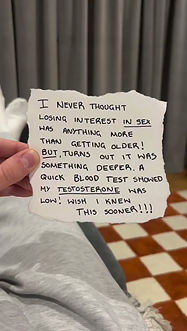
Text-wall Ad

Tier Ranking

Emotional Transformation Slideshow

As you can see, creative diversity is something that works for every single industry.
If you want to scale your business with Meta ads, that’s what you need to focus on.
Don’t just do iterations of your winning ad creative.
Focus on completely different visuals, messages and customer avatars to make your ads impossible to ignore.
This is what allowed us to scale the brand I mentioned earlier from $100k/mo in January to $1M/mo in November last year.
We deployed different ad formats for each awareness stage within our core personas:
-
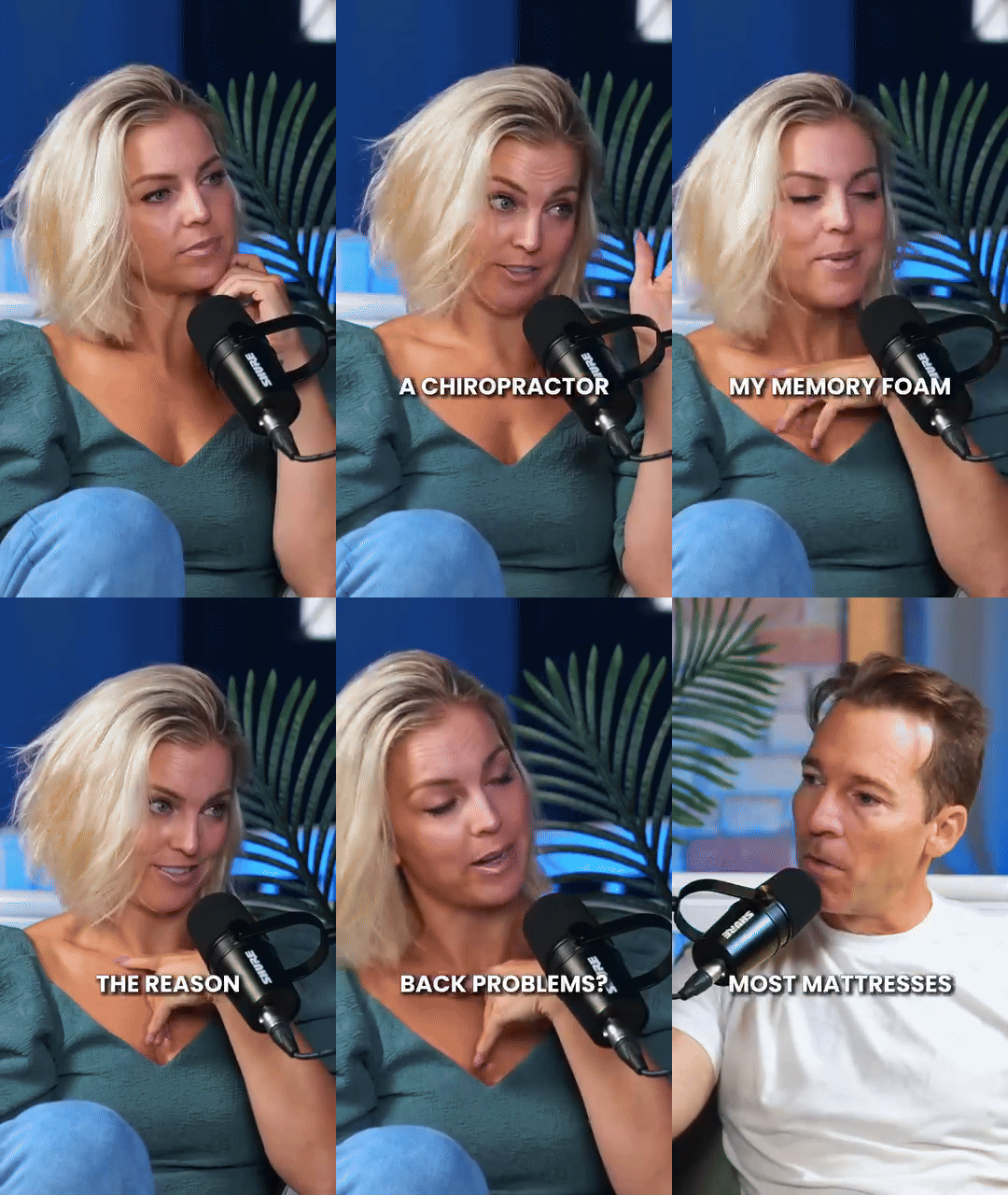
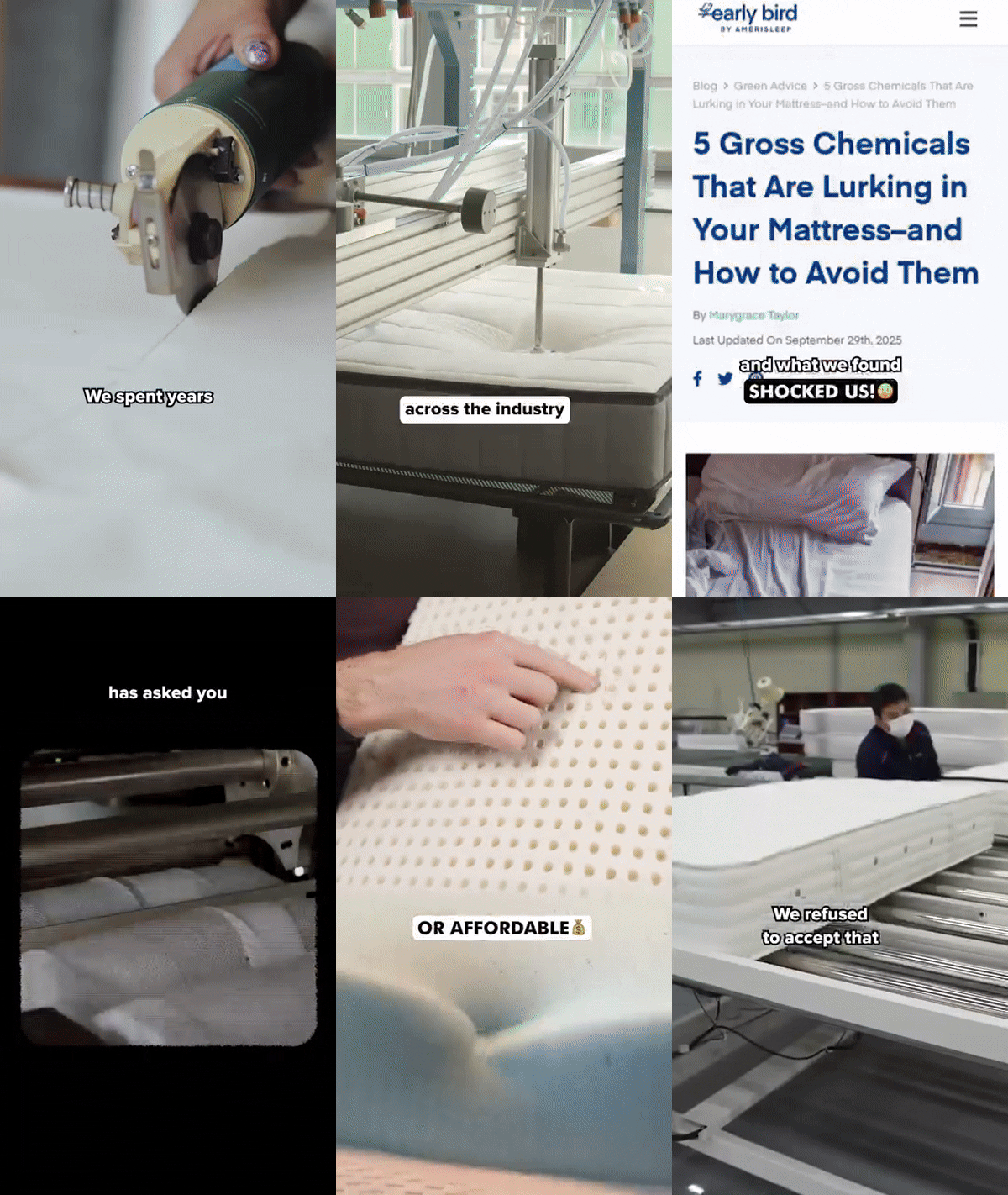
VSLs & Podcast-style ads for Unaware audiences - focusing on education
3000+ Likes

3600+ Likes

-
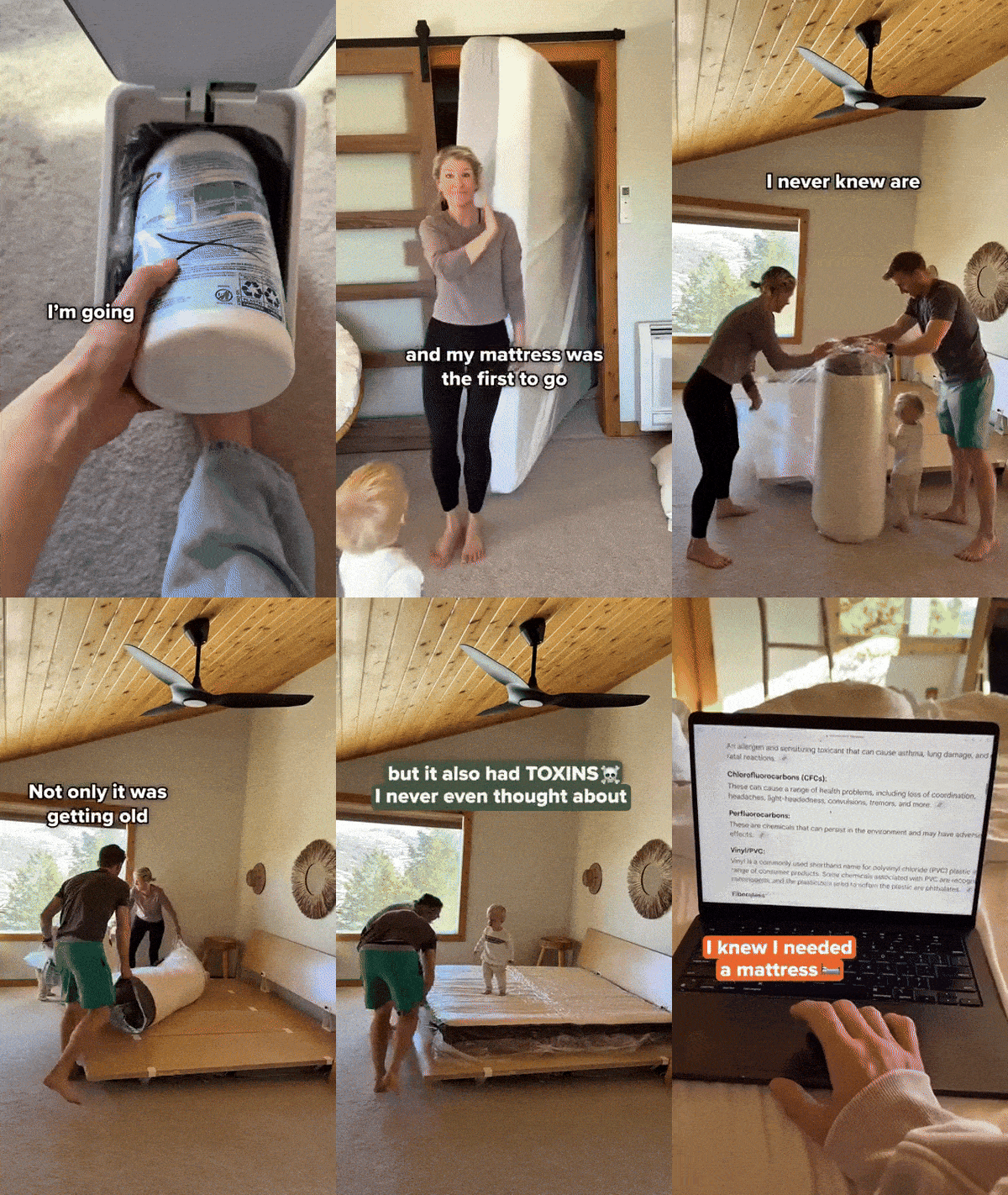
UGC & VSLs for Problem Aware - conversational content connecting their symptoms to their mattress

-
Static Ads for Solution Aware - social proof handling objections in real-time
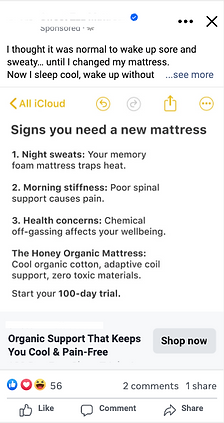


Multiple formats, unlocking different audience segments at different awareness stages.
The result was not 1, not 2, not 3, but 12 different ads generating more than $100k in revenue and 2 generating more than $200k in sales.

I don’t know if you can call this luck, but it felt like a smooth operation aligned with everything that the client told us about who their customer is, and it worked.
If you're sitting here thinking "is this going to work for my niche?"... that's exactly what every one of our clients thought before they started with us.
Here’s a recap:
Most brands struggle to scale because they focus on one single ad format: UGC, which gets placed in the same segment during the ad retrieval process.
This means lower new customer reach, higher frequency, lower ROAS, and no new customers.
The solution is Creative Diversity, mapped to awareness stages to allow Andromeda for a broader reach.
In case you want to work with us, our creative packages start at $10,500 per month with a 3-month minimum commitment because you can’t create a strategy for a 30-day period.
If interested, use the calendar below and book a 30-minute strategy session with us
We'll analyze your current approach, identify what you're missing, and show you exactly how this would work for your brand.