
Meta Andromeda: Explained ($51M in revenue)
By Lachezar Voynov
Share this article
This will be the best training on Meta Andromeda you’ll see in 2026.
The purpose of this document is to explain in an easy-to-understand way what Meta Andromeda is, how to adapt your creative strategy to it, and the most successful ad formats we’ve seen work across 30+ ad accounts in 2025.
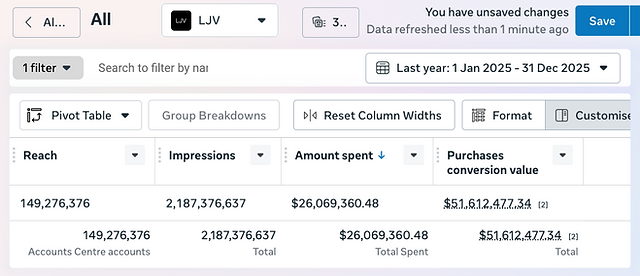
For those who don’t know me, my name is Lachezar. I run an eCommerce ad creative agency that oversaw $25M in Meta ad spend in 2025, driving $51M in revenue, while generating over 2 billion impressions.

We’ve also helped scale 2 different eCommerce brands past $1m/month, which really allowed us to understand how the algorithm works inside a single ad account.


The document will be broken down into 3 different parts:
-
What’s Meta Andromeda and how you should use this information as an advertiser
-
The foundations that will allow you to create winning ads for your business
-
10 examples of winning ad creatives that have allowed our clients to scale
Let’s get into it
Part 1: Meta Andromeda - The New Ad Retrieval Engine
In late 2024 and throughout 2025, Meta fundamentally rewrote its advertising logic by introducing Andromeda. To understand Andromeda, you must first understand the "Retrieval" stage of an ad impression.
What is Andromeda?
When a user opens Instagram or Facebook, Meta’s system must instantly sift through tens of millions of potential ads to find the few dozen that are relevant to that specific user. This is the retrieval stage. Previously, this process relied on rigid, rule-based logic and simpler machine learning models.
Andromeda is a next-generation retrieval engine co-designed with NVIDIA Superchips and Meta’s proprietary hardware. This hardware-software synergy allows Meta to process models that are 10,000 times more complex than previous systems.
How it Works: Hierarchical Indexing
Instead of scanning every ad one by one, Andromeda uses hierarchical indexing. It organizes ads into a "tree-like" structure - starting from broad categories and narrowing down to specific product nuances.
-
Deep Neural Networks (DNNs): These mimic the human brain to identify complex, latent relationships between a person's current mood, their past behavior, and the specific visual cues in an ad.
-
Real-Time Latency: The system performs this retrieval in milliseconds, ensuring that if you just booked a ski trip, you see thermal gear ads almost immediately, rather than weeks later.
How does Meta know you just booked a ski trip? Through the Facebook pixel installed on most websites on the internet.
The Result for eCommerce Brands
Meta reports that Andromeda has delivered a 22% increase in ROAS for AI-driven campaigns and an 8% increase in ad quality. Because retrieval is now so precise, the traditional "targeting" levers (interests, lookalikes) are becoming obsolete. Targeting now lives inside the creative.
What this means for you as an advertiser is that you have to get granular with WHO your customer is and HOW you are speaking to him/her.
If you are selling a mattress, you can’t just market to everyone who’s currently shopping for a mattress (the WHO) and hope that they will come to your website and buy. You need to know:
-
what made those people start looking for a new mattress (new house, old mattress broke, etc)
-
what exactly are they looking for in their new mattress
-
what problem are they trying to solve
-
who’s the decision maker (the wife, the husband, the child)
-
what’s the current mattress they sleep on
And if you want to scale past $1M/month in revenue through Meta, you need to also go deeper in understanding the awareness level of your target customer and eventually expand into cold audiences who are not even shopping for a new mattress by creating a problem and educating them on why they need to care about it.
On top of that, your content (the HOW) needs to be adapted to the type of content your ICP is consuming online. They might prefer watching shorter, or longer content. More visually stimulating, or more educational. Funny or scientific. Meta can now take all of this into consideration in real time.
If Meta sees that TODAY you’re engaging with longer, podcast-style videos, it will start showing you longer, podcast-style ads.
We’re now going to dive deeper into that by demonstrating our approach that’s already proven to work on Andromeda.
Part 2: Our Strategic Approach to Creative Production
With Andromeda doing the heavy lifting of audience retrieval, our agency’s role has shifted from just "content production" to "signal engineering." We don't just make content; we build Creative Systems designed to feed the algorithm the signals it needs to find your customers.
1. Creative Diversity Over Creative Volume
In 2026, testing 20 different "hooks" for the same UGC video is a waste of budget. Andromeda rewards radically different archetypes. If all your ads look like standard UGC, the algorithm will bucket you into one narrow audience segment and stay there.
If you feed the algorithm with the same content, it will go for the same type of audience. Your frequency will go up and your ad results will decline because you’re not reaching new people.
-
The Goal: We aim for distinct visual styles - a cinematic founder story, a chaotic meme-style product comparison, a lo-fi "shaky cam" testimonial, and a motion-graphic explainer. This forces Andromeda to "retrieve" entirely different groups of people for each concept.
2. The Larger Market Formula
Everything starts with understanding the Larger Market Formula.

Here’s what’s happening in your market:
-
3% are ready to buy RIGHT NOW
-
17% are actively shopping and comparing options
-
20% know they have a problem but have no idea what solutions exist
-
60% don't even know they have a problem at all
This is called the Larger Market Formula.
Most eComm brands are fighting for that 3% to 20%, which is the most competitive, and most expensive slice.
Eugene Schwartz identified 5 stages of customer awareness that map perfectly to this:

-
Unaware - that 60% who don't know they have a problem
-
Problem Aware - that 20% who know something's wrong
-
Solution Aware - that 17% who are shopping for solutions
-
Product Aware & Most Aware - the 3% who know about you or are ready to buy
Your opportunity is in stages 1, 2, and 3.
We’ve had a huge success this year implementing it for a client which we were able to scale from $100k to $1M/mo using the exact same approach.

The trend lines on the screenshot are quite self-explanatory.
You see Amount Spent at the top and Conversion Value at the bottom.
The problem they had before starting work with us was they were targeting "people shopping for mattresses" - stages 4 and 5. The 3%.
All their ad creatives were static & video ads comparing their pricing to big competitors, which meant they were fighting for the most price-sensitive customers on the market.
We identified personas in stages 1-3, I will show you examples in a second:
-
Unaware: Health-conscious people who had no idea their mattress contained toxic chemicals
-
Problem Aware: People with back pain issues who hadn't connected it to their mattress
-
Solution Aware: People researching affordable mattresses but hadn't heard of this brand
By systematically creating content for all 5 awareness stages instead of just stages 4-5, we unlocked the 80% of the market not looking to purchase immediately.
That’s where the biggest opportunity lies - in the 80% of the market sitting in stages 1-3.
Meta Andromeda allowed us to target consumers who were not targeted by our competitors because nobody is going after the upper stages of awareness.
3. UGC 2.0
Knowing WHO to target is the first part of the equation.
You also need a systematic way to create content that reaches each stage.
I call this UGC 2.0 and that’s what we use in our agency. You can call this whatever you want.
UGC 2.0 is based on creative diversity and has 3 layers.
Layer 1: Persona Diversity
This is where you map out all your CORE customer avatars and then go 1 layer deeper to uncover all the sub-avatars for each CORE group.
Meaning that if you have a CORE avatar suffering from back pain, you then have a few sub-avatars with different back pain issues:
-
work-related back pain
-
injury-related back pain
-
chronic conditions
-
mattress-related back pain
Layer 2: Angle Diversity
You have to test 10-15 different messaging angles per persona. Problem-solution, educational, social proof, shocking factor, cost-saving - each angle attracts different customers within the same persona.
Layer 3: Format Diversity
Different content formats - VSLs, podcasts, UGC, street interviews. Each format trains Meta's algorithm differently and unlocks different audience segments.
This is what it looked like for our client
PERSONA DIVERSITY:
We identified 4 core customer avatars:

-
People with back pain
-
Couples with different sleep preferences
-
Health-conscious people
-
Side-sleepers who wake up with hip and shoulder pain every day
Each persona got its own content strategy.
ANGLE DIVERSITY:
Take just the back pain persona. We didn't stop there.
We analyzed close to 4000 customer reviews, on top of every Reddit thread and Facebook ad comment we saw and discovered back pain customers actually break into 4 distinct sub-groups:
-
mattress-attributed pain - we blamed their current mattress
-
work-related back pain - we connected sleep quality to work performance
-
injury/accident-related pain - we focused on recovery and proper spine support
-
chronic medical conditions - we emphasized long-term health management
Every one of those groups needed a different angle and a different message in order to have a better chance at converting them.
FORMAT DIVERSITY:
Then we deployed different formats for each awareness stage within that persona:
-
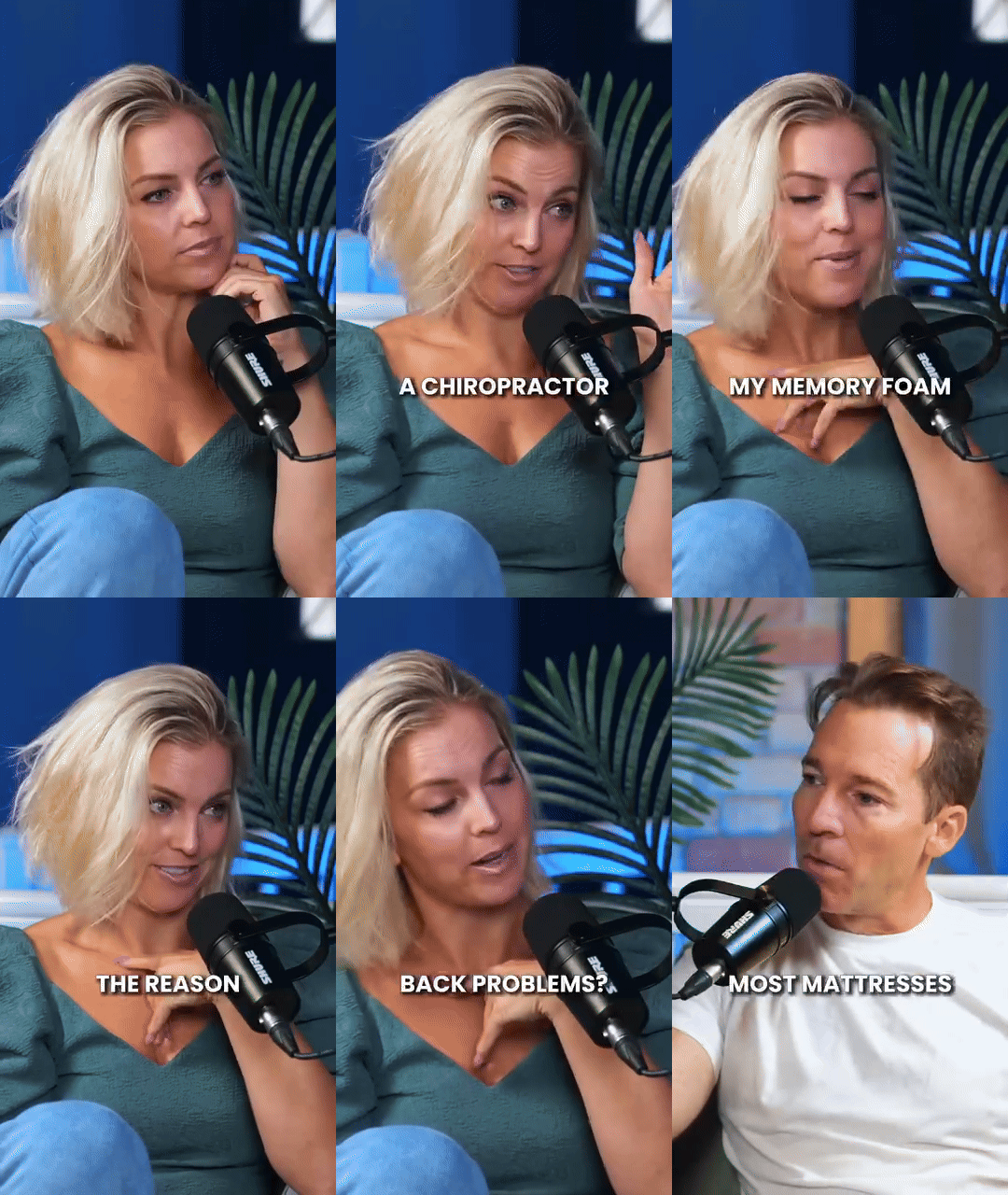
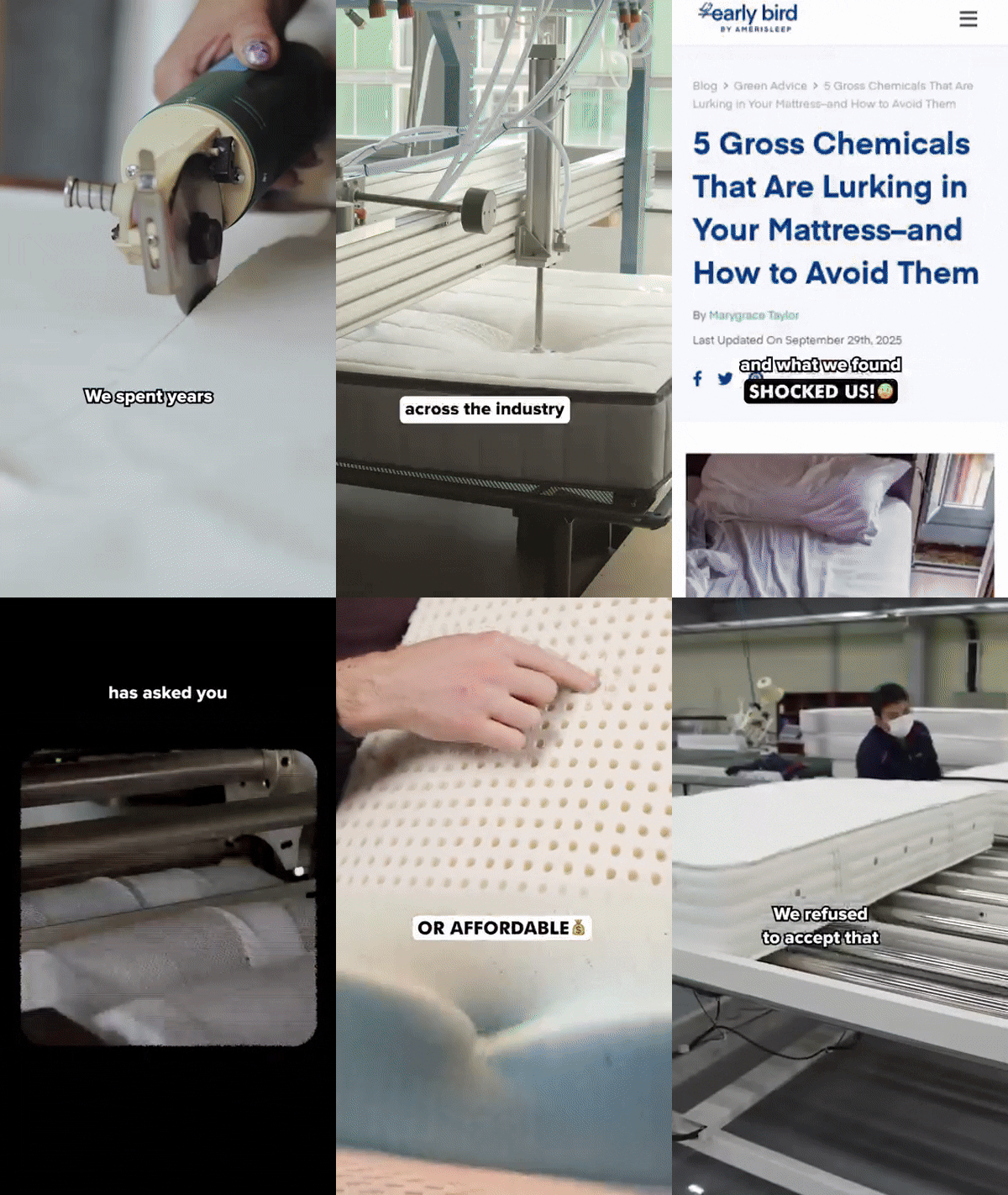
VSLs & Podcast-style ads for Unaware audiences - deep education about mattress toxins and back pain connection
3000+ Likes

3600+ Likes

-
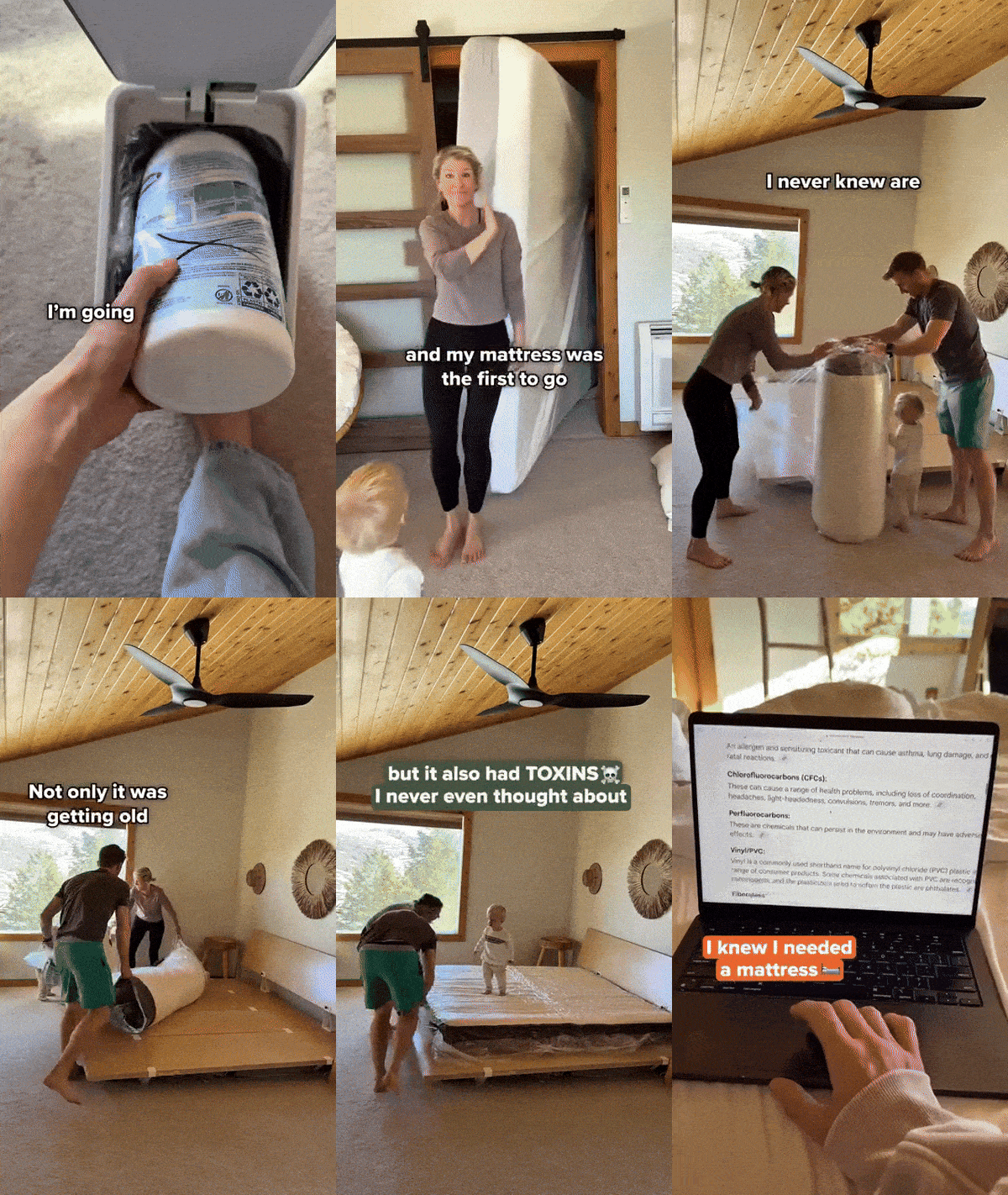
UGC & VSLs for Problem Aware - conversational content connecting their symptoms to their mattress

-
Static Ads for Solution Aware - social proof handling objections in real-time
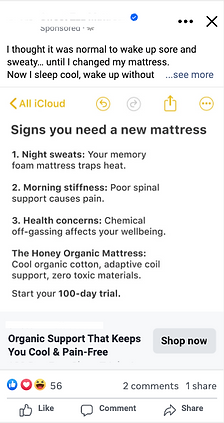


Same persona, same core angle but multiple formats unlocking different segments at different awareness stages.
The result was not 1, not 2, not 3, but 12 different ads generating more than $100k in revenue and 2 generating more than $200k in sales.

I don’t know if you can call this luck, but it felt like a smooth operation aligned with everything that the client told us about who their customer is, and it worked.
Part 3: 10 examples of winning ad creatives that have allowed our clients to scale
Now, we’re coming to the last part of this document which will give you 10 examples of content that would allow Andromeda to serve your ads to a distinct group of people which will result in more new customers for your brand.
Everything you’ll see will be content created exclusively by our agency.
As a reminder, these ad types have contributed massively to our clients’ growth and have allowed us to generate over $50M in sales while our competitors have been struggling due to all of Meta’s updates, including Andromeda.
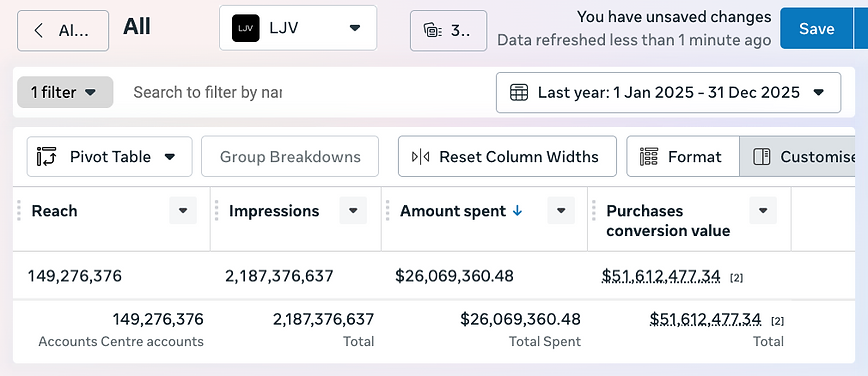
I will not share the exact results of the ads you’ll see below, but they have all turned into winners for our clients.
Founder-led Storytelling

If there is a story behind the creation of your brand, tell it!
People on social media love watching behind-the-scenes content from their favourite brands.
This is a direct-response VSL disguised as a founder story. A great way to differentiate your brand while aiming for conversions.
ASMR

An unexpected winning ad we created for our client.
By creating content that focused on sound effects, we unlocked a completely new placement (Reels) for this ad, resulting in a 200% increase in ROAS.
VSL Ads

Mini-VSL ads like this 4-minute video are the bread & butter of our agency.
It allows you to go deeper into educating your consumer on why every other solution on the market fails and why yours is different.
Ads like this one could easily go on to generate over $1M in revenue for your business.
In-store Experience

If you’re competing against popular brands and you’re trying to steal their market share with Meta ads,
one ad creative concept that you absolutely must film is the following.
Write a script that discredits your competition by listing out all the reasons why they are a terrible choice.
Get a content creator to visit a grocery store and visually demonstrate why your competitors suck (showing & explaining ingredient list, demonstrating the lack of functionality, etc).
After 60 - 90 seconds of roasting your competitors, introduce your solution.
AI-Generated Content

We’ve found that the best way to use AI for your ads is to make it absolutely clear from the start that this is AI.
Don’t try to deceive your customer using fake AI-generated content creators. They are not stupid and it will do more harm than good for your business.
Use AI to create something funny that focuses on the solution you are offering.
Text-Wall

If you think that people on social media won’t read a long wall of text, you just have no idea how social media works.
People don’t have short attention spans.
They just have no tolerance for bad content.
If your text is long but relevant, people will read it and people will buy from it.
Short-form Emotional Slideshow
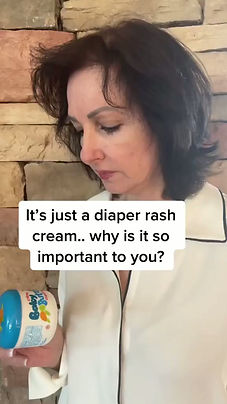
Not every ad needs to be a direct-response marketing masterclass.
Some ads just need to showcase an emotional transformation and speak to people’s feelings instead of their brains.
This 12-second ad tells the story of the creation of our product, which resulted in more sales than most direct-response ads we produced.
Podcast Ads

If you want to scale your ads, you have to use authority figures.
This is a great way to add more social proof behind your product, especially if you sell something that requires a lot of education.
Use the podcast format to produce something native to the feed while also building a bulletproof case for why people need to buy from you.
The Whiteboard Ad

This format works because it’s native to the feed.
It’s an ad that does not look like an ad but an educational piece of content.
Use this to position your product as the better option than the most popular alternative on the market.
Unexpected Visual

This ad works because it’s unexpected. People don’t usually see spokespeople wearing a mask.
And if they do, they know that they are about to hear important and secret information.
This format immediately stops the scroll because it’s different.
As you can see from the examples above, our approach works across MANY different industries so the likelihood it will work for you is pretty high.
And this is just a small portion of the ads we produced for our clients.
There are a lot more ad creatives that have generated $500k in sales each but of course, this is only reserved for our paying clients.
If you're sitting here thinking, "is this going to work for my niche?"... that's exactly what every one of these brands you see above thought before they started with us.
Here’s a recap:
The problem is most brands are targeting 3% to 20% of their audience while missing the 80%.
The solution is the Larger Market Formula + UGC 2.0 Framework mapped to awareness stages to allow Andromeda for a broader reach.
In case you want to work with us, our creative packages start at $10,500 per month with a 3-month minimum commitment because you can’t create a strategy for a 30-day period.
If interested, click the link below and book a 30-minute strategy session with us.
We'll analyze your current approach, identify what you're missing, and show you exactly how this would work for your brand.